The Campaign Killer: Why Deepfakes Are Your Biggest Threat This Election
Content
Do your voters actually trust you?
It's the key question this election. Because how can they trust you when they can't even trust what they're seeing?
Deepfake content is about to flood the internet, and these aren't just blurry, obviously fake videos anymore. They're sophisticated campaign weapons designed to destroy reputations overnight.
Most People Think They Can Spot a Deepfake. They Can't.
A study from the National Institutes of Health confirms a huge problem:
Most of us think we can spot a deepfake. But the reality? Barely a quarter of us actually can.
Your voters aren't dumb. They're just human. Our brains evolved to trust what we see and hear. We're not wired to question video evidence. And deepfake technology has gotten so good that even experts struggle to identify fakes.
This creates a perfect storm for political destruction.
The Trump-Musk Deepfake: A Warning
This isn't a future threat. It's happening right now. It is a campaign killer.
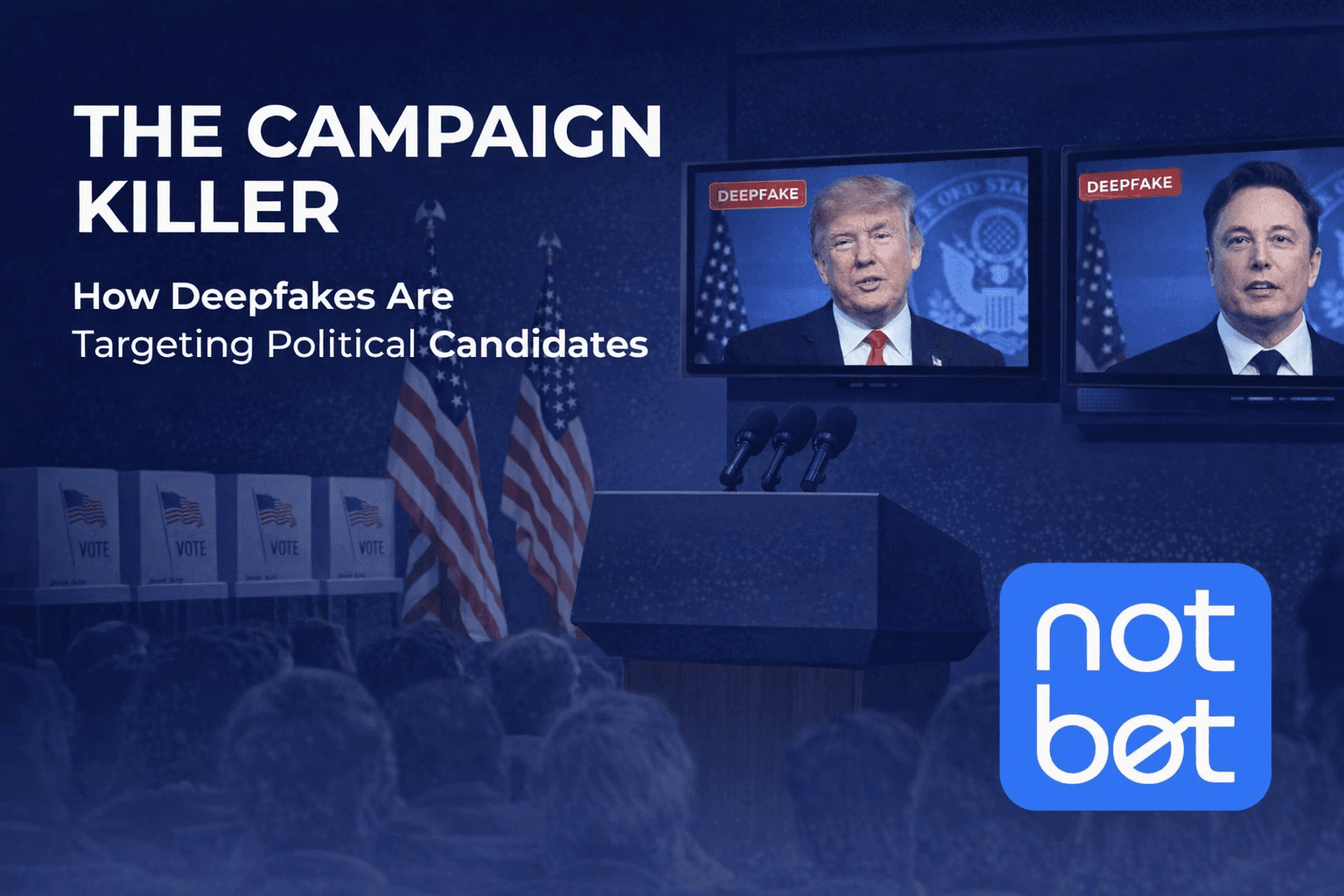
A viral deepfake showed Donald Trump in a humiliating, completely fabricated situation with Elon Musk. It was so invasive that it was even hacked onto TVs inside a federal building.
Think about that for a moment.
If AI can make a former president look like he's doing something that outrageous, what could it make you look like you're doing?
- Accepting bribes?
- Making racist statements?
- Having affairs?
- Committing crimes?
Any of these could destroy your campaign overnight. And by the time you issue a denial, millions have already seen the fake. The damage is done.
You Can't Fight Deepfakes with Fact-Checks
The traditional campaign playbook — issue a statement, send out fact-checks, hope the media corrects the record — doesn't work against deepfakes. Here's why:
- Fakes spread faster than corrections — Your denial reaches a fraction of those who saw the fake
- Denials can amplify the story — "Candidate denies doing X" makes people curious about X
- Voters don't fact-check — Most people don't read past headlines, let alone check sources
- The first impression sticks — Even when corrected, the fake image lingers in voters' minds
By the time you've responded, the damage is irreversible.
The Proactive Defense: not.bot
There is a proactive defense, and it's called not.bot.
Think of it like a digital autograph — a unique signature for all your campaign's real content. You place this not.bot sticker on all of your authentic videos and social posts.
How It Works
Getting started is incredibly simple:
- Prove you're human once — Verify your identity using government ID
- Create your signature — Generate your unique digital sticker
- Sign your content — Add the sticker to all authentic campaign communications
And here's the critical part: your personal data is only stored on your device. not.bot doesn't have it. It can't be hacked from their servers because it's not on their servers.
Creating a New Campaign Rule
This is way more than just a tool. It's a whole new campaign protocol, and the rule is dead simple for your staff, the media, and especially your voters:
See the sticker, it's real. Don't see it, it's not.
By signing every authentic communication, you're training your voters to spot what's fake. You're creating a new reality where the absence of your signature is the red flag.
Flipping the Script
Think about what this does strategically:
Before not.bot:
- Deepfake drops
- Goes viral
- You issue denial
- Damage is done
With not.bot:
- Your real content has your signature
- Fake content doesn't
- Voters know it's fake immediately
- Fake never gains traction
You completely flip the script. Now the absence of your signature stops damaging lies in their tracks, right before they go viral.
Your Voters Need to Know It's You
Your voters deserve to know when they're actually hearing from you. They deserve to trust that campaign videos are authentic. They deserve protection from malicious deepfakes designed to manipulate their vote.
By signing your content, you're showing respect for your voters. You're saying: "I want you to know this is really me. I take responsibility for this message."
That's not just smart security. That's good governance.
The Lincoln Principle
As Abraham Lincoln observed, "You can fool all the people some of the time and some of the people all the time, but you cannot fool all the people all the time."
But with not.bot, you ensure the deceivers fool none for long.
When every authentic message bears your seal, and every unsealed message is revealed as suspect, the foundation of electoral deception crumbles.
Time to Protect Your Campaign
The takeaway is simple:
It's time to protect your campaign. It's time to stop the lies.
Go to not.bot and build your defense right now.
Don't wait until a deepfake goes viral. Don't wait until you're issuing desperate denials. Don't wait until your opponent uses this against you.
Be proactive. Verify your communications. Protect your voters.
The election may depend on it.
Watch on YouTube: Do Your Voters Trust You?